Pamlico
Mariners' Museum, Uncurated Search Results
Type: Coast Guard Cutter
Year:
Builder:
Location:

These records are found in the online catalog of The Mariners’ Museum and Park in Newport News, Virginia. Uncurated search results are presented to give researchers and interested readers an idea of whether the museum’s archives contain information about this vessel and whether it may be worthwhile to visit the museum’s catalog search page for further investigation. Uncurated results may be inaccurate or incomplete.
Search mode: Exact Name. Search phrase(s): "Pamlico". Results returned: 44. Results displayed in this table: 44.
Use these buttons to send uncurated search results to your own app or text document for further research. First, check the box for any row, or click "Select All" then uncheck any rows. Then click "Show Selections". You can then copy your selections from the text box and past them into your app.
| Fetch? | Row ID | Media | Date | Vessel | Place | Related Places | Inscription/Marks | Subject | Notes | Archive Number |
|---|---|---|---|---|---|---|---|---|---|---|
| 1 | 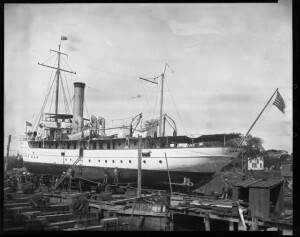 | Circa 1925 | Pamlico (Steam cutter : 1907).; United States. Coast Guard. | Norfolk (Va.). | Piers–Virginia–Norfolk.; Dry docks–Virginia–Norfolk.; Boats and boating–Maintenance and repair. | Shows the Coast Guard cutter Pamlico in dry dock for repairs. She is being repainted by men in uniforms. Stern quarter view, showing most of the name and one of the propellers. | P0010/-#04 | |||
| 2 | 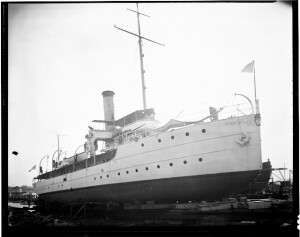 | Circa 1925 | Pamlico (Steam cutter : 1907).; United States. Coast Guard. | Norfolk (Va.). | Piers–Virginia–Norfolk.; Dry docks–Virginia–Norfolk.; Boats and boating–Maintenance and repair. | Shows the Coast Guard cutter Pamlico in dry dock for repairs. Front quarter view, the life ring provides the vessel name. This is an interpositive copy of a negative. | P0010/-#88 | |||
| 3 | 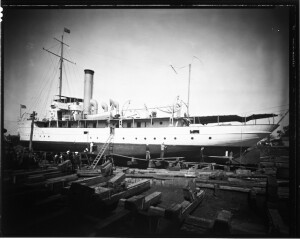 | Circa 1925 | Pamlico (Steam cutter : 1907).; United States. Coast Guard. | Norfolk (Va.). | Piers–Virginia–Norfolk.; Dry docks–Virginia–Norfolk.; Boats and boating–Maintenance and repair. | Shows the Coast Guard cutter Pamlico in dry dock for repairs. Broadside view showing painging and making repairs. This is an interpositive copy of a negative. | P0010/-#89 | |||
| 4 | 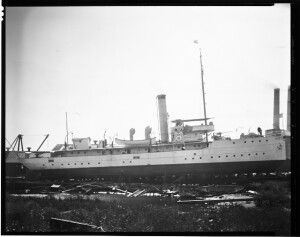 | Circa 1925 | Pamlico (Steam cutter : 1907).; United States. Coast Guard. | Norfolk (Va.). | Piers–Virginia–Norfolk.; Dry docks–Virginia–Norfolk.; Boats and boating–Maintenance and repair. | Shows the Coast Guard cutter Pamlico in dry dock for repairs. This is an interpositive copy of a negative. | P0010/-#90 | |||
| 5 | No image URL. | Proceedings of the United States National Museum, 0096-3801 ; 90, no. 3113 | Echinoida.; Sea urchins, Fossil–North Carolina; Sea urchins, Fossil–South Carolina | Pamlico fossil echinoids __ __by Willard Berry | LB5877 | |||||
| 6 | No image URL. | Pamlico County (N.C.)–History | Pamlico County : __a brief history __Joe A. Mobley | LB33949 | ||||||
| 7 | No image URL. | Turtle fisheries–North Carolina–Pamlico Sound. | Aristocracy must have soup: the terrapin fishery in Pamlico Sound. | LB61064 | ||||||
| 8 | No image URL. | Steam-navigation–History–19th century. North Carolina–Pamlico River; Steamboats–History–19th century. North Carolina–Pamlico River | Cover title. Photocopy of typescript. "August 1966." | LB39043 | ||||||
| 9 | No image URL. | Admiralty–United States. | Admiralty in 1861 : __the Confederate States district court for the division of Pamlico of the District of N.C. | LB42361 | ||||||
| 10 | 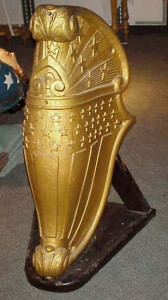 | SHORT DESCRIPTION: Cast bronze bow ornament made up of an American shield. LABEL COPY: BOW ORNAMENT. Bronze bow ornament from the U.S. Coast Guard Cutter "Pamlico" built in 1907 at Wilmington, Delaware by Pusey and Jones. During most of her career her headquarters were at New Bern, North Carolina. In March 1950 she was converted into a power boat and renamed "C. W. Curlett" to operate as a freighter on the Chesapeake Bay. VESSEL INFORMATION-- VESSEL NAME: USCG PAMLICO VESSEL TYPE: steam, twin screw revenue cutter SERVICE DATE: 1907- SHIP BUILDER: Pusey & Jones BUILDER LOCATION: Delaware, Wilmington VESSEL HISTORY: Cutter History (from USCG History office): The cutter USCG PAMLICO was designed to cruise in inland waters and therefore had an extremely shallow draft. She was built by Pusey & Jones Company of Wilmington, Delaware. She entered commissioned service on 11 July 1907. Her officers and crew transferred en mass from the cutter USCG BOUTWELL, after that vessel was slated to be decommissioned later in July. The USCG PAMLICO proceeded to her permanent station at New Bern, North Carolina, arriving there on 4 November 1907. Here she prepared to carry out her assigned duties of enforcing the custom laws of the country, conduct search and rescue operations as well as annual winter cruises, patrol regattas and other maritime events, transport federal officials as required, and participate in community activities as ordered. On 11 September 1908, she proceeded to Norfolk for repairs, returning to her station on 5 November 1908, and on the 24th was ordered for winter cruising in Albermarle Sound, Pamlico Sound, and their navigable tributaries. On 12 June 1909, she overhauled the steam launch Despatch and the steamer Nanticoke to "prevent the violation of the neutrality laws." From 1910 to 1913, she was used to convey many Congressional and press association parties to New Bern and through the New Inland Canal. In August 1913, a new radio apparatus was installed at Baltimore, Maryland, and in November she proceeded on her annual winter cruise. With the declaration of war by the U.S. on 6 April 1917, the USCG PAMLICO was transferred to the Navy Department. She was then ordered to the Chesapeake Bay where she made short training cruises in the bay for the many naval reserve officer trainees being prepared for duty overseas -- a role she carried out for the remainder of the war. The official World War I Coast Guard history noted: The cutter USCG PAMLICO, whose headquarters was at New Bern, N.D., and whose cruising district covered the eastern wwaters of that state (inland waters, the sounds and tributaries), was engaged in assistance work to vessels in distress when Congress on April 6th, 1917, passed the joint resolution declaring that a state of war existed between the United States and the German empire. Under the mobilization orders, this cutter was assigned to duty in the fifth naval district and upon her return to New Bern began to operated under the orders of the commandant of that district. The USCG PAMLICO was cruised [sic] in the waters of her district, and engaged in the enrollment of reserve officers and the enlistment of men for the reserve service. These duties were performed for some time, with additional duties on the part of her commanding and senior engineer officer, who were designated to inspect the motor boats of the district with a view of purchasing for the use of the Navy of those best suited for the purpose. First Lieutenant J. A. Alger commanded the USCG PAMLICO at this time and continued in command until relieved by First Lieutenant John L. Maher on the 29th of May. Lieutenant Maher continued in command until the 25th of August when he was relieved by Captain Henry Ulke, Jr., the former officer being detailed for the enrollment duty in the fifth naval district. In the latter part of October the USCG PAMLICO was ordered to Norfolk, Va., and leaving New Bern, N.C., on the 31st of that month arrived at the navy yard at Berkley, Va., on the 3rd of November. She was assigned to duty in connection with the training of reserve officers of the fifth naval district, and after being docked and having some repairs made entered on that duty. Captain Henry Ulke, Jr., was ordered before a medical board on November 24th, and detached on the same day, First Lieutenant P. H. Scott being ordered to relieve him. Lieutenant Scott continued to command the cutter during the remainder of the war period. She was stationed at Pinner's Point, Va., and made numerous short cruises in Hampton Roads and Chesapeake Bay during which times the naval reserve student officers were given the necessary instructions to fit them for duty overseas. Beginning on this duty at Pinner's Point where she arrived on the 23rd of January, 1918, the USCG PAMLICO remained there, with the exception of the short training cruises heretofore mentioned until the signing of the armistice on the 11th of November following brought actual hostilities to a close. The work done by this cutter under the command of Lieutenant Scott was of great value to the commandant of the fifth naval district where many reserve officers were enrolled and trained for their duties in the war zone where a great many of them were afterwards ordered." (Vol. 1, p. 81). She was returned to the Coast Guard on 28 August 1919, when the entire service returned to the Treasury Department and was again assigned to New Bern. She then returned to her normal peace-time duties. During World War II, after the Coast Guard had once again been transferred to the Navy, Pamlico was designated as WPR-57 and was assigned to operate under the Assistant Captain of the Port at Morehead City from March 1942 until May, when the assistant was promoted to Captain of the Port. With the cutter were 30 reserve boats used to maintain a constant patrol of the waterfronts at Morehead City, Elizabeth City, New Bern, and Washington, North Carolina, and also a continuous patrol of Bogue, Beaufort, Drum and Ocracoke Inlets and The Drain. At these inlets all boats entering and leaving were boarded and examined for identification cards, boat licenses, and any other necessary papers. The boats on patrol at the cities enumerated made a similar check of boats along the waterfront, and investigated docks for possible accumulations of waste material and other hazardous conditions. In March, 1943, when a serious explosion occurred at the Port Terminal at Morehead City under the control of the Navy, the Captain of the Port and his men were among the first on the scene of the disaster, rendering help to the wounded and posting guards and patrols in the stricken area. When in June, 1943, a commercial tug-towed barge capsized due to a top-heavy load of logs, USCG PAMLICO and the tender USCG LINDEN (WAGL-228) searched the area for the logs and the tender Hydrangea (WAGL-236) recovered a body. She underwent a major overhaul in May of 1944, including repairs to the main engine and boiler. She returned to New Bern where she continued to serve, although repairs were needed almost continually at this point in her long government career. During her 40 years of service in North Carolina waters, she became something of a fixture to the local population. They were disappointed to see her retired and even had their congressman call the Commandant, Admiral Joseph F. Farley, to see if they could keep her in service for a longer period of time. But by 1946, she was on her last legs. ADM Farley told the congressman that the Coast Guard had to pour concrete into her bilge to plug the many holes in her lower hull. Bowing to the inevitable, the Coast Guard decommissioned the old cutter on 6 September 1946. She was sold on 7 July 1947. She was converted to a diesel-powered freighter, owned at one point by the Norris Grain Company of New York, with the name C. W. CURLETT. She was sold in 1958 to the Ailsworth Transport Company of Reedsville, Virginia and was renamed to the William Dea. VESSEL DIMENSION: 158'x30'x5'8" Alternate vessel names: (1) USCG PAMLICO (REVENUE CUTTER, CG-15: 1907-1942); (2) USCG PAMLICO (GUNBOAT, WPR-57: 1942-1946); (3) C.W. CURLETT (MOTOR VESSEL: 1947-1958); (4) WILLIAM DEA (MOTOR VESSEL: 1958-?). | CL4065 | |||||||
| 11 | No image URL. | Senate document (North Carolina. General Assembly. Senate) ; no. 8. | Canals–Law and legislation–North Carolina.; Inland water transportation–Law and legislation–North Carolina | A bill to construct a ship canal to connect the waters of Albermarle, Currituck and Pamlico Sounds with Chesapeake Bay, and for other pruposes | LB36008 | |||||
| 12 | 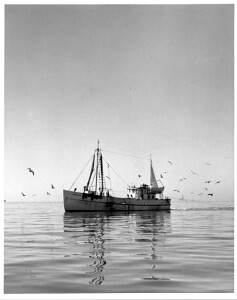 | USA; NORTH CAROLINA | LABEL ON VERSO: DRAGGING THE NETS - PAMLICO SOUND | CURATOR NOTES: Fishermen on a motor sail fishing boat drags their fishing net trolling the calm waters of the Pamlico Sound. | MS0159/-#08 | |||||
| 13 | 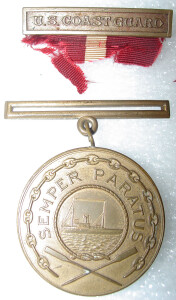 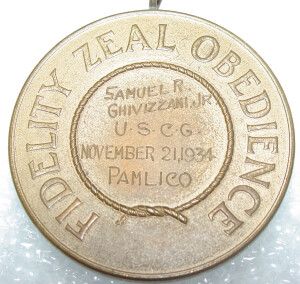 | SHORT DESCRIPTION: One United States Coast Guard Good Conduct Medal (with badly damaged ribbon) bearing a cutter, crossed oars, and SEMPER PARATUS on the obverse. On the reverse is the text 'FIDELITY ZEAL OBEDIENCE". The medal is inscribed to Samuel R. Ghivizzani, Jr. U.S.C.G. NOVEMBER 21, 1934 PAMLICO. NOTES: Samuel R. Ghivizzani (born 08/04/1905, died 07/22/1961, Boatswain, USCG) served aboard the USCG cutter PAMLICO in the 1930s. He may have also served aboard LST-327 between 1943 and 1945 (this assumption is made based upon the presence of XB15 in the materials donated by his widow. Between 23 Sept 1948 – 4 April 1950 he served as the Master or Commanding Officer of the Lightship 116-538. VESSEL INFORMATION: SHIP NAMES: Pamlico; C. W. Curlett; William Dea SHIPBUILDER: Pusey & Jones, Wilmington, Delaware DIMENSIONS: Length: 158', Beam: 30', Draft: 5' 8", Displacement: 455 (fl) Launched: 8 March 1907 Commissioned: 11 July 1907 Decommissioned: 6 September 1946 Disposition: Sold on 7 July 1947 She was converted to a diesel-powered freighter, owned at one point by the Norris Grain Company of New York, with the name C. W. Curlett. She was sold in 1958 to the Ailsworth Transport Company of Reedsville, Virginia and was renamed to the William Dea. | CL11615 | |||||||
| 14 | 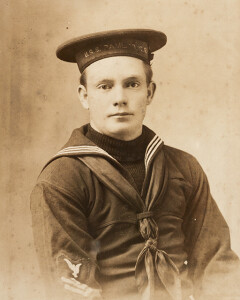 | 1917-1919 | United States. Coast Guard–History–World War, 1914-1918.; Pamlico (Steam cutter : 1907). | Photographer's stamp on mount, LR: J.H. White, Norfolk, Va. | Head and shoulder portrait of James Oliver Lutpon in a US Coast Guard uniform and cap. The cap band reads "U.S.S. Pamlico C. G." | MS0660/-01#01 | ||||
| 15 | No image URL. | Pound net fishing–North Carolina–Pamlico Sound.; Fishers–North Carolina–Pamlico Sound. | Pound netting : rich fishing tradition seeing decline. | LB84922 | ||||||
| 16 | 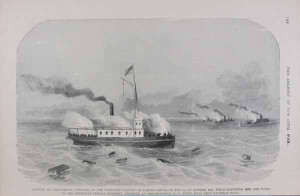 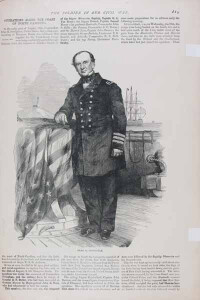 | ADDITIONAL INFORMATION: "The Soldier in Our Civil War", p. 120. | CL17895 | |||||||
| 17 | 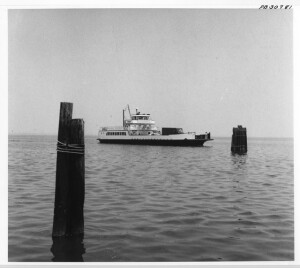 | 1980/05/08 | WRITTEN ON VERSO: BUILT 1966 AT NEW BERN NORTH CAROLINA. 287T, 124X 1 X 35.1 X 8. OWNED BY THE STATE OF NORTH CAROLINA | Ferries | View of free ferry crossing the Pamlico River. From near Aurora, North Carolina to Bay View, near Bath, North Carolina. a 25 minute crossing. | P0001.003/01-#PB30781 | ||||
| 18 | No image URL. | United States. Coast Guard–History–World War, 1914-1918.; Pamlico (Steam cutter : 1907). | One (1) photographic portrait of James O. Lupton, who was stationed on the USS Pamlico (USCG) during World War I. | MS0660 | ||||||
| 19 | No image URL. | SHORT DESCRIPTION: Black hat band with shield and crossed fouled anchors behind. NOTES: Samuel R. Ghivizzani (born 08/04/1905, died 07/22/1961, Boatswain, USCG) served aboard the USCG cutter PAMLICO in the 1930s. He may have also served aboard LST-327 between 1943 and 1945 (this assumption is made based upon the presence of XB15 in the materials donated by his widow. Between 23 Sept 1948 – 4 April 1950 he served as the Master or Commanding Officer of the Lightship 116-538. | CL13525 | |||||||
| 20 | No image URL. | Atlantic Intracoastal Waterway–Commerce.; Pamlico Sound (N.C.)–Commerce | Coastwise shipping.; Intracoastal waterways–North Carolina; Intracoastal waterways–Virginia; Steamboats–North Carolina; Steamboats–Virginia. | In the collections of the Mariners' Museum, Newport News, Va. (#A-35) | LB32315 | |||||
| 21 | 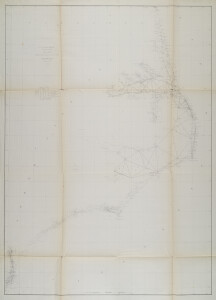 | 1856 | Virginia | "No. 13" upper left; "A.D. Bache Superintendent"; "Scale 1/400,000" | Charts the coasts of North Carolina and Southeast Virginia from Cape Henry to Cape Fear, inclues Albemarle and Pamlico Sounds | MSM 1/-#1735 | ||||
| 22 | 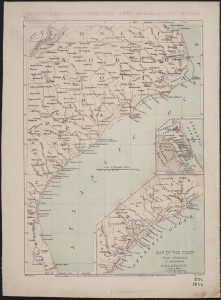 | 1866 | United States, Mid-Atlantic | "J.Wells Del."; "Entered according to act of Congress A. 1866 by Virtue Yorston & Co. in the clerks office of the district court of the United State for the southern dist. of N.York."; "Rae Smith Sc." | Map contains two inset maps: the areas around Roanoke Island (Albemarle Sound and Pamlico Sound), and the coast from Charleston to Savannah. | MSM 1/-#0317 | ||||
| 23 | 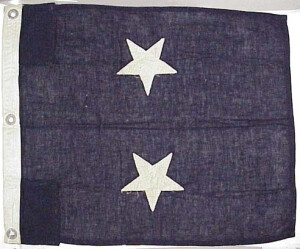 | NOTES: Samuel R. Ghivizzani (born 08/04/1905, died 07/22/1961, Boatswain, USCG) served aboard the USCG cutter PAMLICO in the 1930s. He may have also served aboard LST-327 between 1943 and 1945 (this assumption is made based upon the presence of XB15 in the materials donated by his widow. Between 23 Sept 1948 – 4 April 1950 he served as the Master or Commanding Officer of the Lightship 116-538. | CL4147 | |||||||
| 24 | 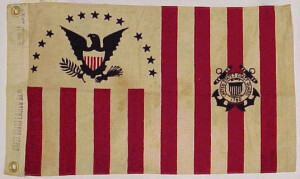 | NOTES: Samuel R. Ghivizzani (born 08/04/1905, died 07/22/1961, Boatswain, USCG) served aboard the USCG cutter PAMLICO in the 1930s. He may have also served aboard LST-327 between 1943 and 1945 (this assumption is made based upon the presence of XB15 in the materials donated by his widow. Between 23 Sept 1948 – 4 April 1950 he served as the Master or Commanding Officer of the Lightship 116-538. | CL4148 | |||||||
| 25 | No image URL. | SHORT DESCRIPTION: One United States Coast Guard shoulder board bearing insignia of a Warrant Officer (Boatswain) and labelled on back: VANGUARD MILITARY EQUIP. CORP. N.Y. NOTES: Samuel R. Ghivizzani (born 08/04/1905, died 07/22/1961, Boatswain, USCG) served aboard the USCG cutter PAMLICO in the 1930s. He may have also served aboard LST-327 between 1943 and 1945 (this assumption is made based upon the presence of XB15 in the materials donated by his widow. Between 23 Sept 1948 – 4 April 1950 he served as the Master or Commanding Officer of the Lightship 116-538. | CL11614 | |||||||
| 26 | No image URL. | SHORT DESCRIPTION: One United States Coast Guard shoulder board bearing insignia of a Warrant Officer (Boatswain) NOTES: Samuel R. Ghivizzani (born 08/04/1905, died 07/22/1961, Boatswain, USCG) served aboard the USCG cutter PAMLICO in the 1930s. He may have also served aboard LST-327 between 1943 and 1945 (this assumption is made based upon the presence of XB15 in the materials donated by his widow. Between 23 Sept 1948 – 4 April 1950 he served as the Master or Commanding Officer of the Lightship 116-538. | CL11631 | |||||||
| 27 |  | SHORT DESCRIPTION: Long, narrow, triangular pennant with very small, 6-1/2" swallowtail. Near the hoist edge there is a blue section extending slightly less than a third of the way down the pennant, with seven white, five-pointed stars along it. The remainder of the pennant is divided in half horizontally. One half is red and the other is white, with these colors extending to the two swallowtail tips. The pennant is 1" wide where the flag begins to split at the swallowtail and narrows down to 1/2" at the end of the pennant. NOTES: Samuel R. Ghivizzani (born 08/04/1905, died 07/22/1961, Boatswain, USCG) served aboard the USCG cutter PAMLICO in the 1930s. He may have also served aboard LST-327 between 1943 and 1945 (this assumption is made based upon the presence of XB15 in the materials donated by his widow. Between 23 Sept 1948 – 4 April 1950 he served as the Master or Commanding Officer of the Lightship 116-538. | CL4146 | |||||||
| 28 | No image URL. | Albemarle Sound (N.C.).; Pamlico Sound (N.C.) | Senate document (United States. Congress. Senate) ; 26th Congress, 1st session, 603. | Inlets–North Carolina.; Channels (Hydraulic engineering)–North Carolina. | Caption title. "July 11, 1840. Referred to the Committee on Commerce, and ordered to be printed." | LB3664 | ||||
| 29 | No image URL. | SHORT DESCRIPTION: Lower section of screwpile shows spiral fitting which turned into bay bottom acting as support for lighthouse. Cut-off of screw lighthouse leg with tip and two blades. The screwpile was used in the Bluff Shoal Lighthouse in Pamlico Sound, North Carolina (about seven and one half miles from Ocracoke). NOTES: 1903 – The metal work for this light-house was completed by the contractors and delivered on March 25, 1903, at the Lazaretto light-house depot. By the end of June, 1903, the contractor for erecting the structure at the site had assembled most of the materials (including the metal work) at a point near the site and had commenced a pier or platform from which to carry forward the placing of the foundation piles in position and the building of the house. 1904 – On June 30, 1903, the contractor had assembled at a point near the site most of the materials for building this light-house and had begun the construction of a working pier or platform. This was completed on July 20, and the metal work was landed on it five days after. The driving of the foundation piles was finished on August 13. The framing of the wooden superstructure was commenced August 17 and the entire structure was completed by the middle of December, 1903. The structure consists of a square one-story wooden dwelling, resting on five wrought-iron piles—one in the center and the other at the angles— and surmounted by an iron lantern with copper roof. The light was shown on January 15, 1904, for the first time. It is flashing red of the fourth order, with a focal plane 38 feet above mean high-water. A bell struck by machinery every 15 seconds is sounded during thick or foggy weather. The Bluff Shoal Lighthouse contained a fourth order lens. | CL24234 | |||||||
| 30 | 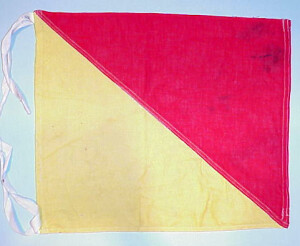 | SHORT DESCRIPTION: Set of square semphaphore flags. Divided diagonally with one half red and the other yellow. The flags have two strips of cotton tape 11/16" wide stitched in each of two corners on one side for use in tying the flag to a pole. NOTES: Samuel R. Ghivizzani (born 08/04/1905, died 07/22/1961, Boatswain, USCG) served aboard the USCG cutter PAMLICO in the 1930s. He may have also served aboard LST-327 between 1943 and 1945 (this assumption is made based upon the presence of XB15 in the materials donated by his widow. Between 23 Sept 1948 – 4 April 1950 he served as the Master or Commanding Officer of the Lightship 116-538. | CL9624 | |||||||
| 31 | No image URL. | SHORT DESCRIPTION: United States Coast Guard Chief Petty Officer's cap insignia or collar device. The insignia is a shield with stars and stripes with a fouled anchor behind. NOTES: The Coast Guard Chief Petty Officer emblem is symbolized by a fouled anchor with a shield superimposed on its shank. NOTES: Samuel R. Ghivizzani (born 08/04/1905, died 07/22/1961, Boatswain, USCG) served aboard the USCG cutter PAMLICO in the 1930s. He may have also served aboard LST-327 between 1943 and 1945 (this assumption is made based upon the presence of XB15 in the materials donated by his widow. Between 23 Sept 1948 – 4 April 1950 he served as the Master or Commanding Officer of the Lightship 116-538. | CL13526 | |||||||
| 32 | 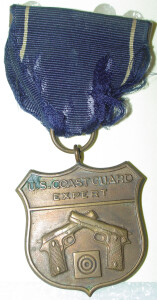 | SHORT DESCRIPTION: One United States Coast Guard Expert Pistol Shot Badge with frayed ribbon. Shield shaped medal marks "U.S. Coast Guard Expert" at the top. The bottom shows two crossed hand guns over a target. The medal hangs from a dark blue ribbon with a thin cream colored stripe at each outside edge. The medal is blank on the reverse. NOTES: Samuel R. Ghivizzani (born 08/04/1905, died 07/22/1961, Boatswain, USCG) served aboard the USCG cutter PAMLICO in the 1930s. He may have also served aboard LST-327 between 1943 and 1945 (this assumption is made based upon the presence of XB15 in the materials donated by his widow. Between 23 Sept 1948 – 4 April 1950 he served as the Master or Commanding Officer of the Lightship 116-538. | CL11616 | |||||||
| 33 | 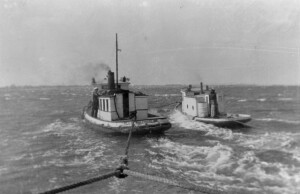 | Circa 1930 | Original Floating Theatre. | on verso: Original Floating Theatre being towed by Elk and Trouper, Pamlico Sound. | View from the vessel of the 2 towboats in the water. | P0001.010/01-#PJ151 | ||||
| 34 | 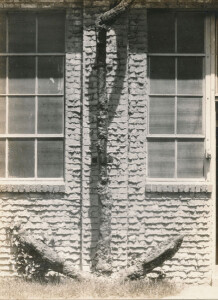 | NOTES: This anchor was found in the ocean near Topsail Inlet, North Carolina which is about 60 miles south of the lower end of Pamlico Sound. Some fishermen snagged their nets on a sunken object, and since this area was known to have been the haunt of the notorious pirate "Blackbeard", the fisherman decided to raise the object, hoping it would be treasure. Mr. Clark obtained the anchor from these men, and placed it in his yard at Elizabeth City, North Carolina as an ornament. NOTES: From Erik Farrell, museum Objects Conservator: DA3 (1934.0215.000001) was recovered from an area off Topsail inlet NC which is considered a credible hypothesis for the location of the 1750 wreck of El Salvador. Our anchor is mentioned specifically in a masters thesis (pg 55 of a MA thesis by Raymond Tubby, 2000, East Carolina University) as potential evidence for that hypothesis. It's absolutely not a firm ID - and probably never will be given the sheer number of people who have failed to find that wreck - but it's at least a proposed association. ADDITIONAL INFORMATION: See object file. LABEL COPY: Old Plan wooden stock anchor, c. 1770 Raised from Topsail Inlet, North Carolina by fishermen, the stock was missing prior to recovery DA 3 (9/84) | CL1428 | |||||||
| 35 | 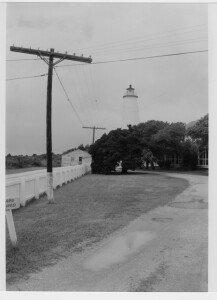 | 5/15/1971 | USA; NORTH CAROLINA | noted: Ocracoke Island Lighthouse, Ocracoke Island, North Carolina. Located near Pamlico Sound, N.C. Built 1823, rebuilt 1854, 75 ft. high. | View of lighthouse and out buildings | MS0192/01-01.21#004 | ||||
| 36 | 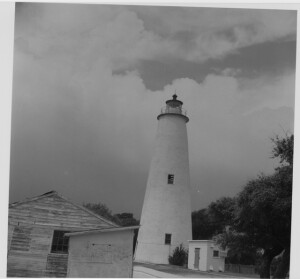 | 5/15/1971 | USA; NORTH CAROLINA | noted: Ocracoke Island Lighthouse, Ocracoke Island, North Carolina. Located near Pamlico Sound, N.C. Built 1823, rebuilt 1854, 75 ft. high. | View of lighthouse and out buildings | MS0192/01-01.21#001 | ||||
| 37 | 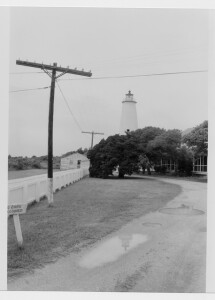 | 5/15/1971 | USA; NORTH CAROLINA | noted: Ocracoke Island Lighthouse, Ocracoke Island, North Carolina. Located near Pamlico Sound, N.C. Built 1823, rebuilt 1854, 75 ft. high. | View of lighthouse and out buildings | MS0192/01-01.21#008 | ||||
| 38 | 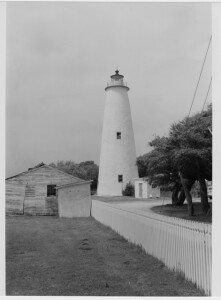 | 5/15/1971 | noted: Ocracoke Island Lighthouse, Ocracoke Island, North Carolina. Located near Pamlico Sound, N.C. Built 1823, rebuilt 1854, 75 ft. high. | View of lighthouse and out buildings. | MS0192/01-01.21#002 | |||||
| 39 | 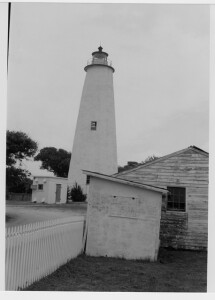 | 5/15/1971 | USA; NORTH CAROLINA | noted: Ocracoke Island Lighthouse, Ocracoke Island, North Carolina. Located near Pamlico Sound, N.C. Built 1823, rebuilt 1854, 75 ft. high. | View of lighthouse and out buildings | MS0192/01-01.21#005 | ||||
| 40 | 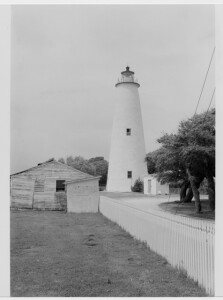 | 5/15/1971 | USA; NORTH CAROLINA | noted: Ocracoke Island Lighthouse, Ocracoke Island, North Carolina. Located near Pamlico Sound, N.C. Built 1823, rebuilt 1854, 75 ft. high. | View of lighthouse and out buildings | MS0192/01-01.21#006 | ||||
| 41 | 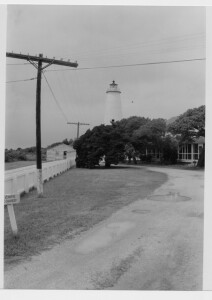 | 5/15/1971 | USA; NORTH CAROLINA | noted: Ocracoke Island Lighthouse, Ocracoke Island, North Carolina. Located near Pamlico Sound, N.C. Built 1823, rebuilt 1854, 75 ft. high. | View of lighthouse and out buildings | MS0192/01-01.21#007 | ||||
| 42 | 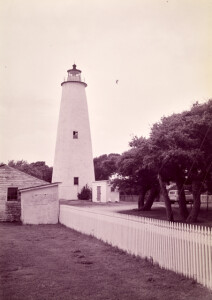 | 5/15/1971 | USA; NORTH CAROLINA | noted: Ocracoke Island Lighthouse, Ocracoke Island, North Carolina. Located near Pamlico Sound, N.C. Built 1823, rebuilt 1854, 75 ft. high. | View of lighthouse and out buildings | MS0192/01-01.21#003 | ||||
| 43 | No image URL. | Circa 1896 | Norfolk, Virginia Beach and Southern Railroad Company.; Princess Anne Hotel (Virginia Beach, Va.). | Printed in bottom left: "This map sent to any address upon receipt of 10 cts. in postage R. H. Pannill, C.P.A., N.V.B.&S.RR, Norfolk, Va."; also printed in bottom left: Drawn by P. Matthew, C. E., Norfolk, Va."; printed in bottom right: "Copyrighted by R. H. Pannill, C. P. A., N.V.B.&S.RR"; printed in bottom right, outside of the neatline: "The Norris Peters Co., Photo-Litho, Washington, D.C.". | Color lithographic map of Hampton Roads, the Outer Banks, and the Albemarle, Pamlico and Currituck Sounds. The map shows the route of the Norfolk, Virginia Beach and Southern Railroad and the location of the Princess Anne Hotel. Railroad lines are shown as solid red lines; steamship lines/routes are indicated by dotted red lines. The location of the hotel is also marked in red. The rail lines run from Norfolk Harbor to the Princess Anne Hotel and from Norfolk to the Munden Point terminus of the railroad, on the northern end of Currituck Sound. The Norfolk, Virginia Beach and Southern Railroad was incorporated in 1896 in the Commonwealth of Virginia. It ceased to exist in 1900, when it was absorbed by the Norfolk and Southern Railroad. The Princess Anne Hotel was built in 1885 at the Virginia Beach oceanfront. Originally owned by the Norfolk, Virginia Beach Railroad & Improvement Company, it became the property of the Norfolk, Virginia Beach and Southern Railroad Company upon its organization in 1896. | MSM 1/-#1656 | ||||
| 44 | 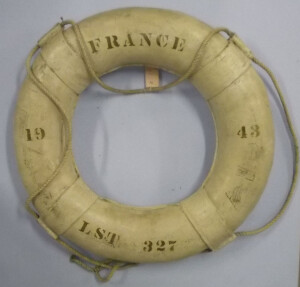 | ADDITIONAL INFORMATION: Dictionary of American Naval Fighting Ships, Volume VII, pp. 569-571 NOTES: Samuel R. Ghivizzani (born 08/04/1905, died 07/22/1961, Boatswain, USCG) served aboard the USCG cutter PAMLICO in the 1930s. He may have also served aboard LST-327 between 1943 and 1945 (this assumption is made based upon the presence of XB15 in the materials donated by his widow. Between 23 Sept 1948 – 4 April 1950 he served as the Master or Commanding Officer of the Lightship 116-538. VESSEL INFORMATION-- VESSEL NAME: LST 327 VESSEL TYPE: Tank Landing Ship SERVICE DATES: 1943-1948; Commissioned: 6 March 1943; Decommissioned: 19 November 1945 BUILDER: Philadelphia Navy Yard BUILDER LOCATION: Pennsylvania, Philadelphia DIMENSIONS: Length: 327' 9" overall, Beam: 50', Draft: 1' 6" bow, 7' 5" stern (unloaded); 8' 2" bow, 14' 1" stern (loaded -- at sea); 3' 1" bow, 9' 6" (loaded -- beaching), Displacement: 1,625 (light); 4,080 (w/ full load of 2,100 tons) VESSEL HISTORY: Laid down on 12 November 1942 at the Philadelphia Navy Yard; launched on February 11, 1943; sponsored by Miss Helen B. Higgins; and commissioned on March 5, 1943. During World war II, LST-327 was assigned to the European theater and participated in the following operations: Tunisian operations - July 1943, Sicilian occupation July 1943, Salerno landings- September 1943, Anzio-Nettuno advanced landings - January throughout March 1944, Normandy invasion - June 1944 On August 27, 1944, LST-327 was severely damaged by an enemy mine (it is now believed that the ship was struck by an acoustic torpedo fired by the U-92. According to its war diary the U-92 fired a single acoustic torpedo on the last LST in a convoy of several steamers and LSTS.) in the English Channel. Upon her return to the United States, she was decommissioned on November 19, 1945 and struck from the Navy list on December 1945. The tank landing ship was sold to the Sun Shipbuilding & Drydock Co., Chester, Pennsylvania on September 15, 1948. LST-327 earned five battle stars for World War II service. - information from Dictionary of American Naval Fighting Ships, Volume VII, page 609 MAJOR EVENT: World War II, Battle of Normandy CAPTAINS OR OTHER RELATED PEOPLE: SHIP OWNERS: United States Navy FATE: Sold for scrap. PLACE OF DISPOSAL: Pennsylvania, Chester DATE OF DISPOSAL: 1948 ADDITIONAL INFORMATION: [From: https://www.uscg.mil/history/cutters/USN/LST/LST_327.pdf] USS LST-327 Complement: 111 Troops: 163 Commanding Officers: LT A. Volton, USCG: 6 March 1944 - 27 September 1945 LT Ludwig Wedemeyer, USCG: 27 September 1945 - 19 November 1945 History: USS LST-327; LST Flotilla 18, Group 52, Division 104 The USS LST-327 was built at the Philadelphia Navy Yard and entered commissioned service on 6 March 1944 under the command of LT A. Volton, USCG. By early May, preparatory for the assault on Sicily, she was shuttling war material between Arzew and Bizerte. Anchored at Bizerte, Tunisia, on 8 June 1943, LST-327 took her position in convoy as part of the Western Naval Task Force for securing the beach between Licata and Gala, Sicily, in the invasion of Sicily. She anchored off Licata Beach at 0125 on the 10th and lowered small boats with the first wave of assault troops. At 0505 fired on enemy aircraft. At 0800 commenced unloading men and vehicles via LCTs completing unloading at 1340. Stood out of Licata Bay and at 1808 was underway forming convoy to Bizerte. Six more resupply echelons that followed from Bizerte to Licata and Palermo and return included the 327 in the convoys, and on each journey the LST carried men and vehicles to the front lines and brought back many prisoners and wounded. The last of these trips was not completed until 28 August 1943. On 3 September 1943, the 327 began loading men and vehicles for the Salerno invasion and on the 7th was underway forming part of FSS-3. On the 9th she proceeded to be beaching area of Green Beach and anchored in the Gulf of Salerno. Here 11 miles from the beach she encountered shell fire from enemy shore batteries and got underway to get out of range. After a red alert and heavy anti-aircraft fire at 2117 she got underway and stood into Red Beach, beaching at 0249 on the 10th. By 0619 all personnel and vehicles were ashore and the 327 retracted and at 0840 joined convoy SBM-2. Meanwhile the crew had fired on enemy planes without casualties or damage. Underway on the 11th she moored at Bizerte. Seven more resupply echelons with vehicles and men were subsequently dispatched from Bizerte and Tripoli Harbor to Salerno and Palermo. On the 6th of these trips on 8 October 1943, the LST was in collision with another unidentified vessel presumably in the same convoy resulting in a temporary bulkhead between crew's quarters and crew's head being twisted and torn and in other damage. Proceeding under her own power she reached Palermo on 8 October 1943, for 10 days availability for repairs. After the 7th round trip the LST started from Palermo on her 8th trip on October 30th for Naples but returned to Palermo after two hours with a broken oil pump. She remained at Palermo undergoing repairs to her generator until 8 January 1944. The LST-327 having completed repairs departed Palermo for Karouba, Tunisia, on 8 January 1944. There she loaded British officers and men as well as vehicles for the invasion of Anzio. Departing on 21 January 1944, she anchored off Peter Beach at 0025 on the 22nd, as rocket ships began shelling the teach. At 0226 the first wave of LCVPs landed troops on the beach. She moved to the unloading anchorage early in the afternoon but enemy shell fire from the beach became so heavy that she returned to her previous anchorage. Several red alerts followed and at 1627 the 327 departed for X-Ray sector and anchored. At 0100 on the 23rd enemy boats were being engaged by support craft. At 0740 with low doors and ramps opened she unloaded to LCT-212 moored thwartship. Unloading to three other LCTs followed and at 0934 all LCTs were loaded and away. Taking on LCVP crews after moving closer to the beach five enemy planes were fired upon at 1123. At 1420 she departed for Naples. Two other trips were made with vehicles and men between Naples and Anzio and on 1 February 1944 she began towing LCT-205 for Bizerte but had to return because of bad weather. Generator repairs were made and she started again in convoy toward the LCT-205 on the 5th. On the 8th the LCT-205 was so damaged by the sea that the LST-327 was unable to remain in convoy and SC-770 was detailed as escort. Both bulkheads of the LCT-205 were washed overboard at 2045 and half an hour later the LST's engines stopped and she began drifting, with the LCT riding nicely on the starboard quarter. On the 10th she anchored in the lee of Pantalleria, getting underway again on the 11th attempting to make Bizerte. At 2015 she had lost three miles and she anchored head to wind. At 0820 on the 13th with anchor aweigh she made only two knots overground when at 1005 with the LCT-205's list to starboard increasing she took shelter by anchoring in the lee of the Island of Zombria. Men were lowered to inspect the LCT and assist in bringing her alongside. At 1940 the LCT personnel were removed to the LST-327 and reported that all tanks, engine room and living quarters on the LCT were fleoded. The LCS that had made the trip to the LST could not be hoisted aboard because of heavy seas and at 2210 the bridle to the LCT-205 parted, setting her adrift. The LCS was taken in tow but at 0330 on the 14th appeared to be shipping large quantities of water. Attempting to bring her alongside for pumping, the line parted and the LCS went adrift, having been holed in the starboard bow by the LST's propeller guard. It was decided to abandon the LCS. At 1800 the LST-327 moored at Karouba, Tunisia. She shifted to Bizerte on 15 February 1944, and then on the 25th proceeded to Palermo with vehicles and men. Proceeding to Naples on 14 March 1944, she left for Anzio on 6 March. Returning to Naples on the 11th she was back at Anzio on the 13th where she remained as a mother ship until early in May 1944. The LST-327 arrived in the United Kingdom on 11 May 1944, and on 1 June was moored in Tilbury Basin. On the 2nd she loaded vehicles and men for the Normandy invasion, departing for Southend until the 5th when she got underway for the French coast. On the 7th at 0002 she anchored in the Nan Rhino area and at 1316 stood into the unloading area close to the beach, where she unloaded into HM LCT-2004 and six small boats officers and men for Neptune Beach. She returned to London on the 9th. A second trip to France was made on the 11th. On the 13th the 327 was rammed by the LST-534 causing a gash eight feet long in the first compartment forward of frame 22 and 24. She stood into Roger Green Beach on the 13th to unload and beached, and at 2235 took aboard 76 German POWs for transportation to the United Kingdom, returning to Southampton on the 15th. Four other round trips to France with vehicles and men ensued and following the sixth trip she was at Jig Green Beach, Normandy, France, on 30 June 1944. While working out of English Channel ports, building supply dumps in Northern France, she struck an enemy mine on 27 August 1944, and put into Plymouth with extensive damage. After being repaired, LST-327 departed Plymouth on 11 December 1944 for Falmouth and on 23 June 1945 she departed Falmouth for Norfolk, Virginia, arriving there on 19 July 1945. She was decommissioned at Norfolk on 19 November 1945, struck from the Naval Register on 5 December 1945, and was sold for scrap on 15 September 1948 to the Sun Shipbuilding and Drydock Company of Chester, Pennsylvania. The LST-327 earned five battle stars for her service during World War II. Sources: LST files, Coast Guard Historian's Office. United States Coast Guard. The Coast Guard At War. V. Transports and Escorts. Vol. 2. Washington: Public Information Division, Historical Section, U.S. Coast Guard Headquarters, May 1, 1949, pp. 66-116. United States Navy. Dictionary of American Naval Fighting Ships. Volume VII. Washington: Naval Historical Center, 1981, pp. 574-742. | CL5927 |
Created 2026 by Don Barker, CBMM volunteer, for the Chesapeake Shipbuilding Project. shipbuilding@sailingworkboats.es